
Portfolio Engineering in Practice
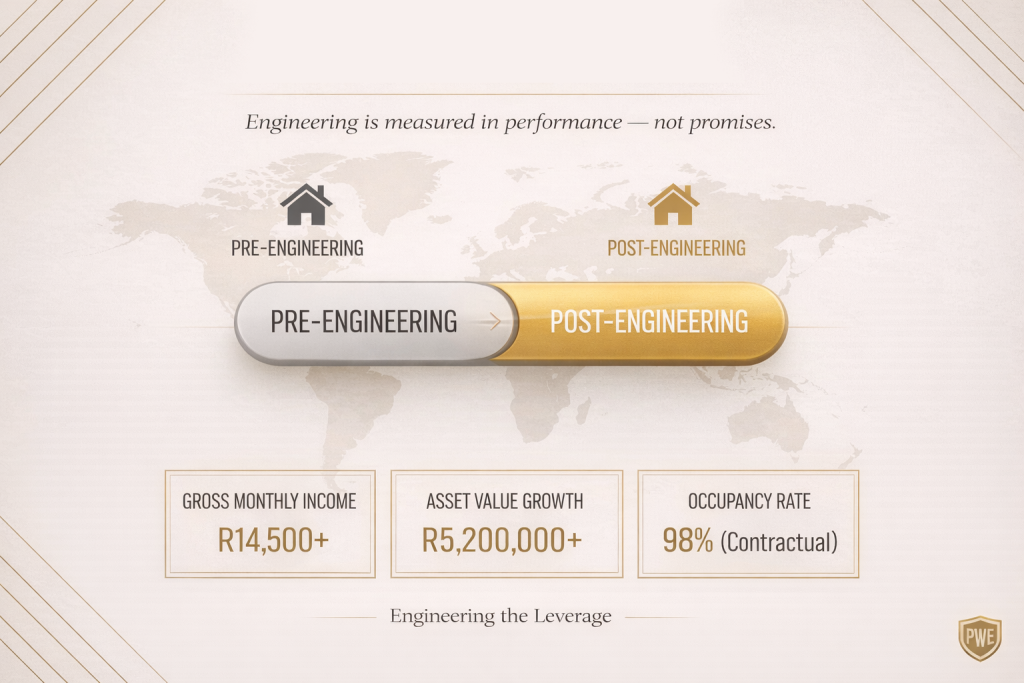
Engineering is measured in performance — not promises.
The following case files demonstrate how disciplined calibration, margin protection, and structural alignment translate into measurable capital outcomes.
- No hype.
- Only engineered results.
Performance figures are independently verified within client files.
Results are specific to structure, capital profile, and implementation discipline.
01 — Dr. M – Engineering the Multi-Let Engine
The Profile
- Client: Specialist Surgeon
- Objective: Salary Replacement & Tax Shielding
- Timeline: 12-Month Sovereign Mandate
The Problem (Diagnostic)
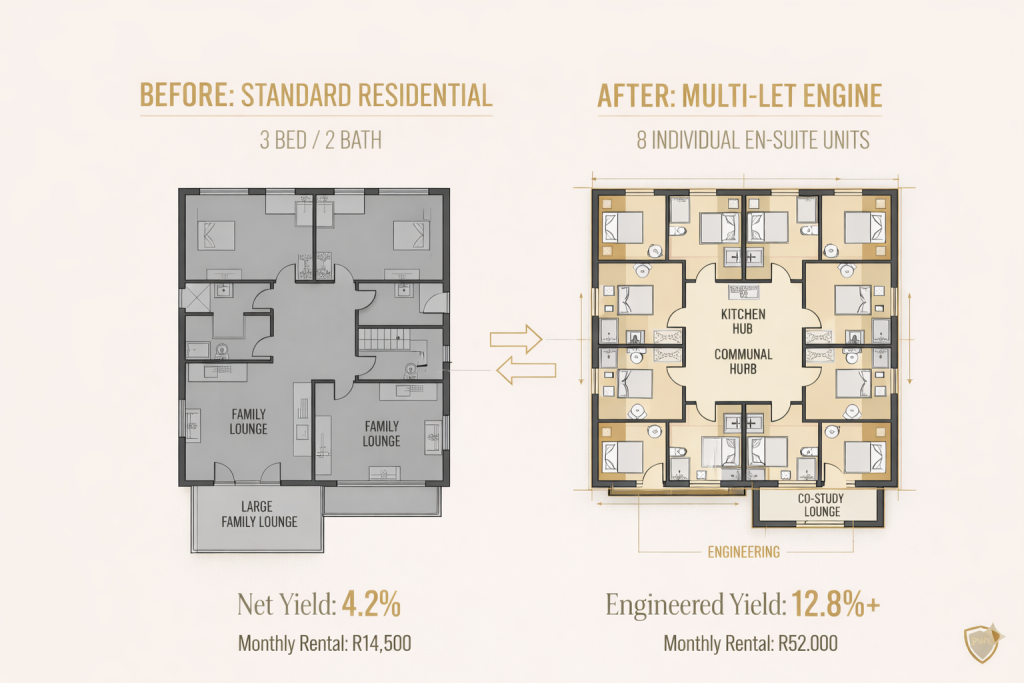
The client had a high professional income but was heavily exposed to personal tax (45% bracket) and had R2.2M in “Lazy Equity” sitting in a primary residence bond. The existing portfolio consisted of two “standard” residential rentals yielding a net 4%—underperforming inflation and providing no structural protection.
High-Income Medical Professional
Before Engineering
• Net Yield: 4.2%
• Trapped Equity: R2.2M
• High Personal Tax Exposure
After Engineering
• Net Yield: 12.8%
• R650,000 Embedded Margin
• R115,000 Annual Tax Shield – (Activated via Section 13sex depreciation structure)
What Changed
This was not a property upgrade.
It was a structural shift from income dependence to engineered capital architecture.
Now it’s not just numbers.
It’s transformation.
From static rentals to engineered income architecture.
“The shift wasn’t just in the numbers, but in the peace of mind. I no longer own a house; I own a high-performance system that runs independent of my time in the theater.” — Dr. M, Sovereign Client
02 — Cynthia S.– The Student Housing Conversion
The Profile
- Client: Senior Engineering Consultant
- Objective: Diversification into Institutional-Grade Yields
- Target Node: Westdene, Johannesburg (University of Johannesburg)
The Problem (Diagnostic)
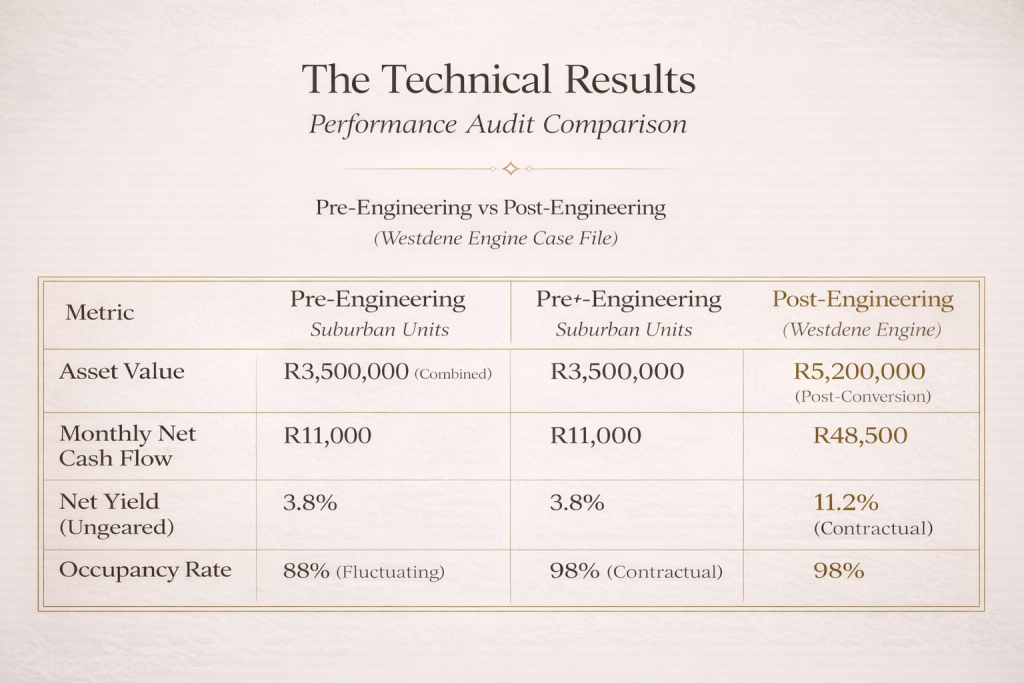
The client was holding several standard residential apartments in saturated suburban markets. The net yield was struggling at 3.8% after levies and maintenance. The client had high borrowing capacity but was “Time-Poor” and could not navigate the complex zoning and compliance requirements of student accommodation.
The Engineering
- Acquired high-density asset within university radius
- Converted residential layout into accredited student housing
- Managed full compliance and operational automation
What Changed
The asset changed.
The yield changed.
But more importantly — the risk became structured, not speculative.
“What I didn’t have was time. What PWE provided was structure, compliance clarity, and performance I could not have engineered alone.” — Cynthia S.
03 — Tshepo V.– Equity Velocity Strategy
The Profile
- Client: Corporate Executive
- Objective: Rapid Portfolio Scaling via Gearing
- Target Strategy: Distressed Buy-to-Flip-to-Hold
The Problem (Diagnostic)
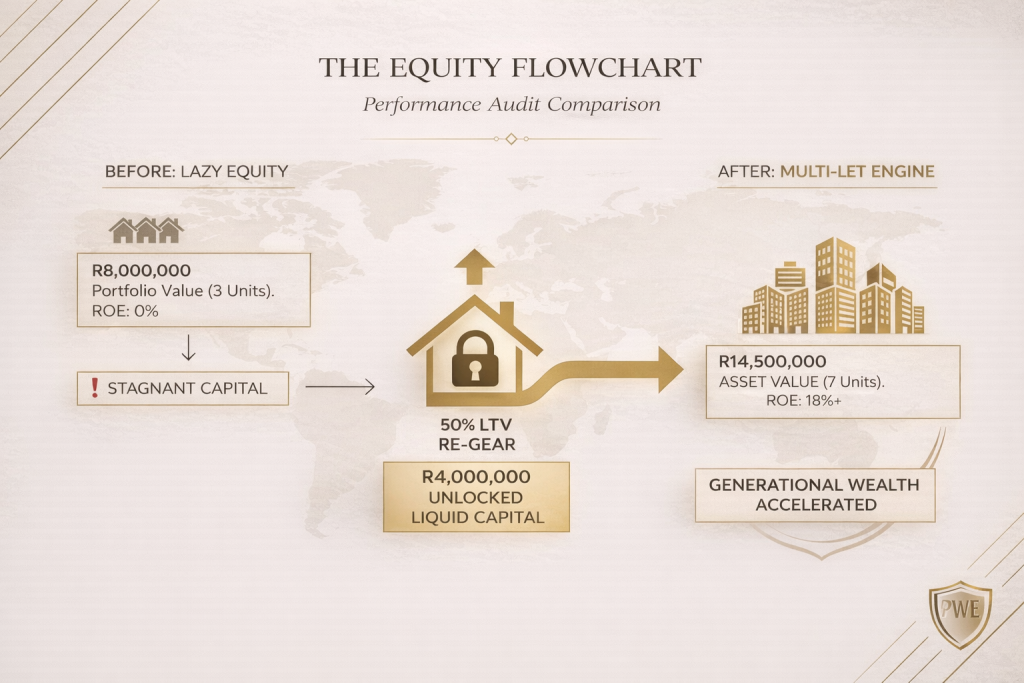
The client had a stagnant portfolio of three properties with high equity (paid off). While “safe,” the Return on Equity (ROE) was dismal. They were sitting on R8M in Lazy Equity, effectively self-funding their wealth at 0% leverage while paying maximum tax on the rental income.
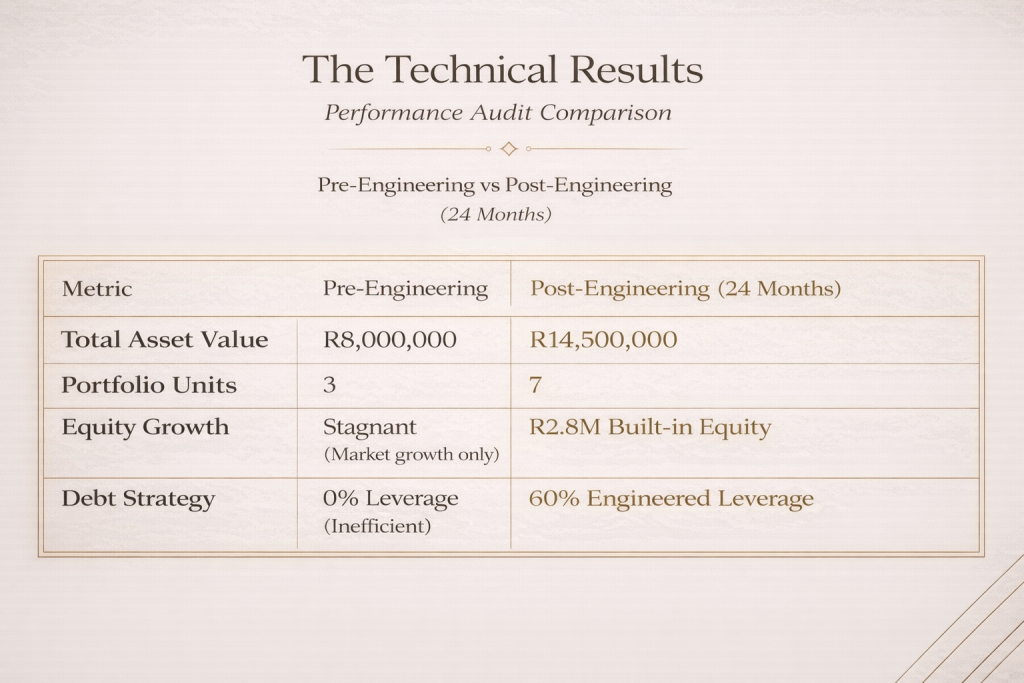
What Changed
Equity stopped sitting still.
It began compounding.
“Yes, the returns improved. But the real value was knowing the structure was solid and the risks were managed.” — Tshepo V.
Engineering Is Structure-Dependent

Performance outcomes are specific to capital structure, risk profile, and disciplined implementation.
Results are not driven by market luck.
They are driven by structure, margin discipline, and calibrated execution.